Difference Between Double Charge and GVT Tile: Design, Durability, Uses, and Selection Guide
 26 Aug 2026
 Share
Share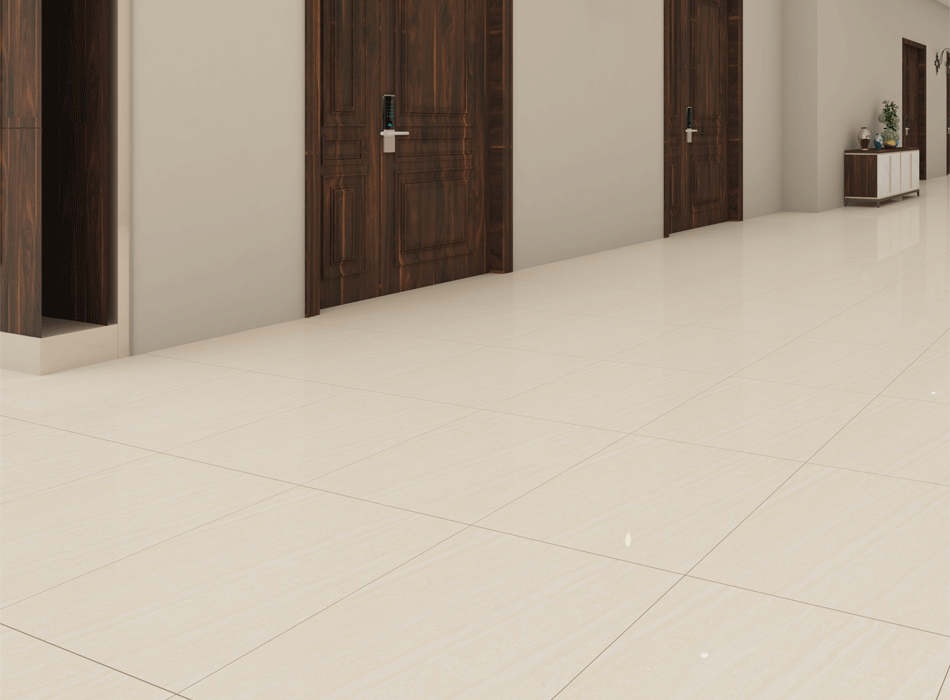
Two vitrified tiles can look almost the same in a showroom or an online store. Once installed, however, their construction begins to matter. It affects the available designs, suitable applications, and how the surface responds to regular movement.
That is the practical question behind the GVT tiles vs double charge comparison. GVT carries a decorative glaze over its vitrified body, whereas a double-charge tile receives a thicker pigmented design layer.
In the blog post ahead, we cover:
- How both tiles are made
- Their main design and performance differences
- Suitable applications
- Selection factors and common mistakes
What are GVT Tiles?
GVT stands for Glazed Vitrified Tile. It has a dense vitrified base covered by a layer of glaze. Digital printing on this surface can produce marble veining, stone effects, wood-inspired patterns, and other detailed designs.
Key characteristics include:
- Decorative variety: Digital printing allows subtle grain, pronounced veining, and bolder patterns.
- Several finishes: Hindware Italian Tile offers GVT tiles in matt, polished, high gloss, carved, and rustic finishes across select collections.
- Flexible placement: Depending on the product, GVT can be used on floors, walls, and feature surfaces.
- Product-specific selection: Size, thickness, finish, and recommended application must suit the intended room.
What are Double Charge Tiles?
Double charge tiles are vitrified tiles made by pressing and fusing two layers of colour pigment into the upper part of the tile. This produces a design layer thicker than a conventional surface print.
The main characteristics of double charge tiles are:
- Thicker pigmentation: The design is restricted to a thin printed image at the top.
- Less conspicuous wear: Added depth helps retain a consistent appearance under regular movement.
- Floor-focused use: These tiles suit living rooms, corridors, offices, and shops.
- Restrained design: Polished surfaces and relatively uniform, colour-led patterns are common.
Hindware Italian Tiles lists 8 mm thick double charge products. The Alexa and Venice series use a classic polished finish.
What is the Difference Between Double Charge and GVT Tile?
The main difference between double charge and GVT tile is the upper surface. GVT has a digitally printed design protected by glaze. Double charge uses two pigment layers to form a thicker design surface. This affects the design range, common placement, and visibility of wear.
| Comparison Point | Double Charge | GVT |
| Surface design | Formed using two pigment layers | Digitally printed and glazed |
| Appearance | More uniform, polished designs | Detailed patterns and varied finishes |
| Common placement | Mainly floors | Floors and walls |
| Main priority | Consistent appearance under regular use | Decorative flexibility |
| Care | Routine cleaning retains the polish | Depends on the selected finish |
This distinction does not make every GVT delicate or every double charge tile suitable for all busy areas. The individual product specification still matters.
GVT vs Double Charge Tiles: Which Suits Different Spaces?
Living Rooms and Bedrooms
A living room may suit either option. The decision rests on design preference, traffic, and whether the surface continues onto a wall.
Choose GVT when:
- The floor needs a distinct marble, stone, or patterned appearance.
- A specific texture or matching feature wall is part of the plan.
Consider double charge when:
- The room receives regular family movement.
- A polished, uniform floor will continue through adjoining rooms.
- Bedrooms usually face lighter traffic, giving colour and finish greater weight.
Corridors and Commercial Floors
Passageways, reception areas, shops, and office corridors face repeated foot movement. Here, usage matters as much as appearance.
GVT may work when:
- The selected product is recommended for the expected use.
- Its thickness and finish correspond with the site conditions.
The GVT label alone does not indicate whether a product is suitable or unsuitable for a busy area.
Double charge may suit the area when:
- Long-term visual consistency is important.
- The flooring will receive steady foot traffic.
Kitchens and Bathrooms
GVT can be used on kitchen and bathroom walls as well as floors, allowing more choice in colour and pattern.
Before selection, check:
- Whether the product is recommended for a wall or floor.
- How the finish responds to water and routine cleaning.
- Whether the intended floor area requires greater grip.
A glossy design suited to a wall should not automatically be used underfoot. Double charge can be considered for kitchen flooring where a uniform surface and resistance to daily movement are priorities. In bathrooms, the suitability of the individual finish matters more than the category name.
How Should GVT and Double Charge Tiles Be Selected?
Start with the Surface and Usage
- Confirm whether the tile is intended for a wall or floor.
- Distinguish a quiet bedroom from a family corridor or retail entrance.
Examine the Actual Finish
- View a physical sample, since catalogue images cannot show every reflection or texture.
- Match matt, polish, or high gloss with the room’s lighting, grip, and cleaning needs.
Read the Product Details
- Compare the size, thickness, finish, and recommended application.
- Confirm the specifications before finalising the layout and the required quantity.
Compare the Complete Cost
- Include cutting, wastage, adhesive, and laying work alongside the tile price.
- Compare options using the same measurements instead of treating either category as universally budget-friendly.
Common Mistakes to Avoid
- Treating all vitrified tiles alike: A shared base does not mean their upper surfaces are constructed identically.
- Buying on shine alone: Appearance cannot replace checks for application, traffic, and upkeep.
- Using one rule for every finish: Matt, polished, and high-gloss tiles can behave differently within the same category.
- Ignoring the layout: Tile size, joints, and cuts influence the appearance as well as the required quantity.
Final Thoughts
There is no universal winner in the difference between double charge and GVT tile. GVT is more flexible when detailed designs, varied finishes or wall-and-floor applications are required. Double charge makes sense for flooring where a thicker pigmented surface and consistent polished appearance are valued.
Hindware Italian Tiles offers both GVT tiles and double charge tiles for different usage needs. Consider the surface, foot traffic, finish, and individual product details together. The right choice is the one that continues to suit the space after the initial showroom shine has become part of everyday life.