How To Remove Limescale from Tiles?
 11 Sept 2026
 Share
Share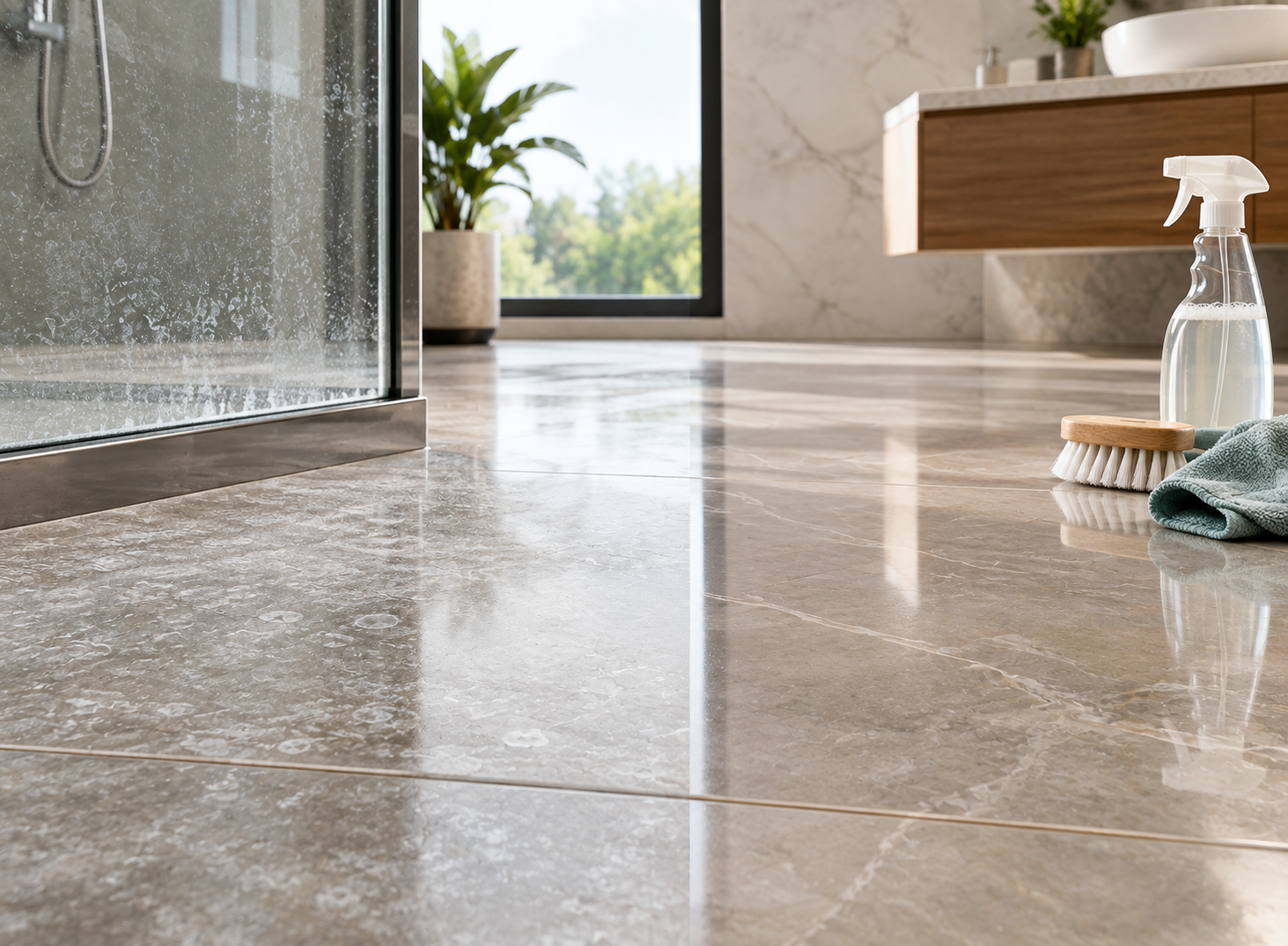
You scrub your bathroom every week, yet those stubborn white patches around the shower, sink, or floor refuse to disappear. At first glance, they look like soap residue, but in reality, it's something more stubborn - limescale.
However, the limescale on tile is not permanent. With the right cleaning method and a few simple maintenance habits, you can remove limescale from tiles without resorting to harsh scrubbing or damaging chemicals.
In this guide, we will cover:
- What is limescale and why it forms on tiles
- Why it is important to remove limescale
- How to remove limescale from tiles using simple methods
- Tips to prevent limescale from returning
- How choosing the right tiles can make everyday maintenance easier
Let's get started.
What is Limescale and Why Does It Form on Tiles?
Limescale is a chalky mineral deposit, mostly calcium and magnesium, left behind when hard water evaporates off a surface. The water disappears, but the minerals don't. Over time, these deposits build up into the white or cloudy patches commonly seen in kitchens and bathrooms tiles.
You will most often notice limescale around areas with high moisture, such as:
- Taps and shower heads, where water sits and drips
- Shower walls and glass, from repeated splashing
- Wash basin edges and kitchen platforms
Why is it Important to Remove Limescale?
Left untreated, limescale can gradually dull the appearance of your tiles, trap dirt and soap residue, and make routine cleaning much more difficult. In moisture-prone spaces like bathrooms and kitchens, heavy buildup can also affect the overall look and hygiene of the room.
Removing limescale regularly helps:
- Restore your tiles’ original finish and shine
- Prevent stubborn mineral deposits from hardening over time
- Make everyday tile cleaning quicker and easier
- Reduce soap scum and grime buildup
- Keep your bathroom and kitchen looking clean and well maintained
How to Remove Limescale from Tiles?
There's no single solution that works for every type of limescale buildup. Light deposits respond well to natural cleaning methods, while thicker layers may need specialised tile cleaners.
Here are some of the safest and most effective ways to clean limescale from tiles:
- Use a White Vinegar Solution for Light Buildup
White vinegar is mildly acidic, which makes it effective against mineral buildup without damaging most glazed surfaces.
To use this tile cleaning method:
- Mix equal parts white vinegar and warm water in a spray bottle.
- Spray the solution directly onto the affected tiles.
- Leave it for 10 to 15 minutes.
- Wipe the surface with a soft cloth or sponge.
- Rinse thoroughly with clean water and dry the tiles.
Tip: Avoid using vinegar on natural stone surfaces such as marble or limestone, as the acid may damage the finish.
- Try a Baking Soda Paste for Stubborn Limescale
For textured tiles or grout lines, a paste gives you more scrubbing power without scratching the glazed tile surface.
To use this tile cleaning method:
- Mix baking soda with a small amount of water to form a paste.
- Apply it directly over the limescale.
- Leave it for 10 minutes.
- Gently scrub using a soft-bristled brush or sponge.
- Rinse thoroughly and wipe dry.
- Commercial Descaler for Very Old Limescale
For a limescale that's been sitting for months, or years, a dedicated descaler usually works faster than natural remedies.
Make sure you:
- Choose a product labelled safe for your tile type, especially with polished or glazed finishes.
- Ventilate the room and wear gloves before applying
- Follow the product's contact time; don't leave it on longer than instructed
- Rinse thoroughly, since leftover descaler can dull the tile's finish over time
- Choose pH Cleaners for Natural Stone Tiles.
Natural stone tiles like marble, granite, or travertine need extra attention and caution as they are particularly sensitive to acidic cleaning agents. So, choose a pH-neutral cleaner made specifically for natural stone.
Tips for Preventing Limescale Buildup
Removing the limescale once is easy. Keeping it from coming back is the real win. Here are some ways to prevent limescale on tile:
- Squeegee shower tiles and glass after every use
- Wipe down wash basins and platforms daily, rather than letting water dry on its own
- Install a water softener if you're in a particularly hard water zone
- Reseal grout lines every year or two, since worn grout absorbs minerals faster
- Keep the bathroom ventilated so moisture doesn't linger on the surface
Choosing Limescale-Resistant Tiles for Your Home
Cleaning habits matter, but so does the surface you're cleaning.
While no tile is completely immune to hard water, premium-quality tiles with smooth, durable finishes are much easier to maintain than porous or uneven surfaces.
This is where Hindware Italian Tiles stand apart. Crafted with premium materials and contemporary finishes, our tiles are designed for modern lifestyles where style and practicality go hand in hand.
Our collection simplifies maintenance by:
- Offering tiles with smooth, durable surfaces that are easier to clean.
- Providing matte finishes that help disguise water spots and mineral marks.
- Featuring low water absorption to help minimise moisture ingress.
Final Thoughts
Limescale is a common part of life in homes with hard water, but it doesn't have to become a permanent feature of your bathroom or kitchen. Knowing what limescale is, using the right cleaning methods, and adopting a few preventive habits can help keep your tiled surfaces looking spotless all year round.
The tiles you choose matter too. With Hindware Italian Tiles, you can choose from a wide range of thoughtfully crafted designs that bring together timeless aesthetics, durability, and easy maintenance. Explore the collection today and bring home tiles that are easier to clean and maintain.