Desert Air Cooler Safety Guide: Electrical Safety, Water Hygiene and Best Practices
 16 Sept 2026
 Share
Share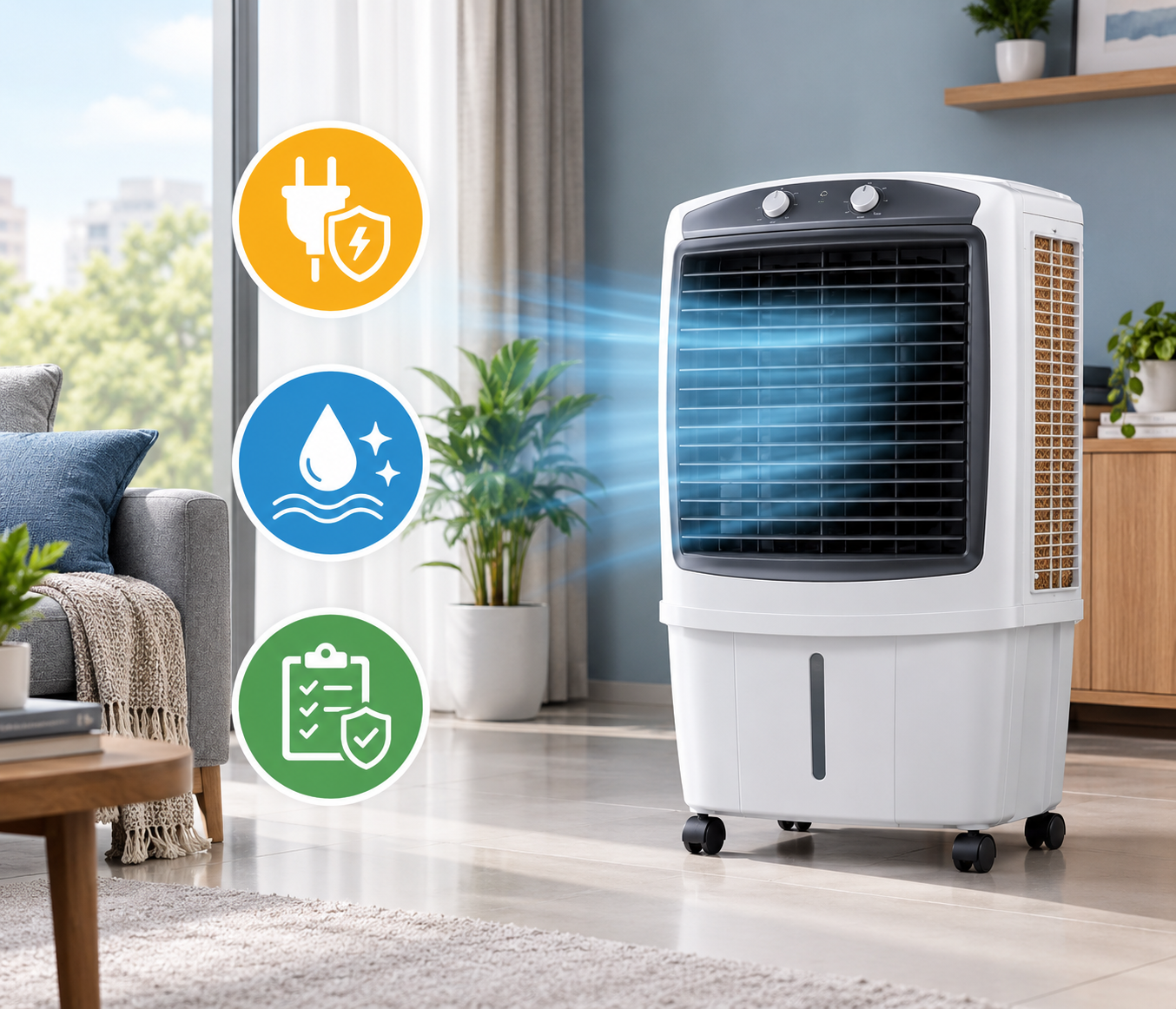
A desert air cooler is one of the most useful appliances during hot, dry summers. In many Indian homes, it runs for hours through the day, especially in regions where the heat feels sharp and dry. A reliable cooler can make the room more comfortable without using as much electricity as an air conditioner.
But a cooler is not something you can switch on for the entire season and forget about. It uses water, electricity, cooling pads, a pump, and a fan together. If you don’t clean the tank, change the water, or check the wiring, small issues can quickly affect both safety and cooling.
This guide looks at the simple things every home should check: electrical safety, water hygiene, regular cleaning, common usage mistakes, and ways to keep a desert air cooler for home working better in summer.
Why Air Cooler Safety Should Never Be Ignored
A desert cooler works best when it is clean, well-ventilated, and placed correctly. Most problems do not start with a major fault. They usually begin with small habits — filling water while the plug is still on, letting old water sit in the tank, placing the cooler too close to a wall, or using the same dirty pads for too long.
These things may look minor, but they can lead to poor cooling, bad odour, blocked airflow, mosquito breeding, or electrical risk.
A well-maintained desert air cooler gives you:
- Safer daily use
- Cleaner airflow
- Better cooling output
- Lower chances of odour and scaling
- Longer product life
The best desert cooler is not just the one that cools well on day one. It should also be easy to maintain through the season.
Electrical Safety Tips for Desert Air Coolers
Since a cooler works with both water and electricity, basic electrical safety is non-negotiable.
- Always switch off and unplug the cooler before filling water or cleaning the tank.
- Do not touch the plug, switch, or wire with wet hands.
- Keep the plug point dry, especially if the cooler is placed near a window or water source.
- Check the power cord before summer starts. If you see cuts, cracks, loose wiring, or exposed parts, get it repaired before use.
- Use a proper three-pin earthed socket.
- Avoid low-quality extension boards. A desert cooler should ideally be connected to a proper wall socket.
- If your area sees frequent voltage fluctuation, use suitable voltage protection as recommended for the appliance.
A few minutes of checking the plug, wire, and socket can prevent damage later. It also makes everyday use much safer for the household.
Water Hygiene Best Practices
The water tank is one of the most ignored parts of a cooler. People often keep adding fresh water on top of old water, but that is not the right habit. Stale water can cause odour, algae, mineral deposits, and mosquito breeding.
Here is a simple routine that works for most homes:
- Change the water every few days instead of only topping it up.
- Empty the tank if the cooler has not been used for a while.
- Clean the tank once a week with mild soap and clean water.
- Rinse the tank properly after washing so soap does not remain inside.
- Check the pump area for dirt or deposits.
- Wash the cooling pads gently if dust or scaling starts showing.
- Replace pads when they look clogged, weak, or damaged.
This one habit alone improves the way a desert cooler feels in summer. The air feels fresher, the cooling pads work better, and the tank does not develop that stale water smell.
Desert Cooler Maintenance Checklist
Even the best desert air cooler needs regular upkeep. A small routine is easier than dealing with poor cooling in the middle of peak summer.
Weekly Checks
- Change old water and refill with fresh water.
- Rinse the cooling pads if they look dusty.
- Check whether water is reaching the pads evenly.
- Wipe the outer body and vents.
- Clean the tank if any smell starts developing.
Monthly Checks
- Deep clean the water tank.
- Remove visible scale, algae, or slime.
- Check the water pump and pipes.
- Inspect the plug, cord, and switch.
- Clean dust from the fan blades and air outlet.
End-of-Season Care
- Drain the tank completely.
- Let the cooler dry before storing it.
- Clean the pads and outer body.
- Cover the unit to protect it from dust.
- Store it in a dry space.
Common Mistakes to Avoid
A desert cooler can underperform even if there is nothing wrong with the appliance. Sometimes, the issue is simply the way it is being used.
- Keeping the room fully closed: Desert coolers need airflow. Keep a door or window slightly open so humid air can move out.
- Blocking the back side: The cooling pads need proper air intake. Do not push the cooler flat against a wall.
- Ignoring old water: Stale water can lead to odour and mosquito breeding.
- Using dirty pads: Dusty or clogged pads reduce cooling.
- Using it during humid weather: A desert air cooler works best in dry heat. During monsoon or very humid days, the cooling may feel weak.
- Choosing the wrong size: A small cooler will not cool a large room properly.
- Skipping wire checks: Damaged wires or wet switchboards should never be ignored.
Avoiding these mistakes can make a noticeable difference in cooling comfort.
Best Practices for Efficient Cooling
Good cooling is not only about buying the best desert air cooler. Placement and usage matter just as much.
- Place the cooler near a window so it can pull in fresh air.
- Keep one window or door slightly open for cross-ventilation.
- Make sure the back panel is not blocked.
- Fill the water to the recommended level.
- Check the pump if the pads are not getting wet evenly.
- Clean the fan and vents if the air throw feels weak.
- Replace worn-out cooling pads before summer gets intense.
Some Hindware Appliances desert coolers come with practical features such as water level indicators and inverter compatibility in select models. These features can be helpful for Indian homes, especially in areas where refilling needs to be monitored often, or power cuts are common.
Maintenance Schedule
Interval | Maintenance task |
|---|---|
Before season | Inspect electrical connections and controls |
Weekly | Check pads are uniformly wet; adjust distribution if needed |
Inspect pads for dust build-up. | |
Monthly | Clean reservoir of visible dust and algae |
Inspect belts and pulley alignment | |
Every 3 months
| Inspect pads thoroughly; replace if thickness or structure is degraded |
Check and clean water distribution tray and channels | |
Every 6 months | Deep clean reservoir, drain fully, remove mineral buildup |
Inspect and service all mechanical parts |
Choose Safer Cooling with Hindware Appliances
A desert cooler can make summer easier, but only when it is used with the right care. Clean water, safe wiring, proper ventilation, and timely maintenance all help the appliance cool better and last longer.
If you are looking for a desert air cooler that fits everyday Indian home use, Hindware Appliances offers a range of home appliances with practical features for seasonal comfort. Choose the right size, maintain it regularly, and your cooler will stay safer, cleaner, and more dependable through the summer.