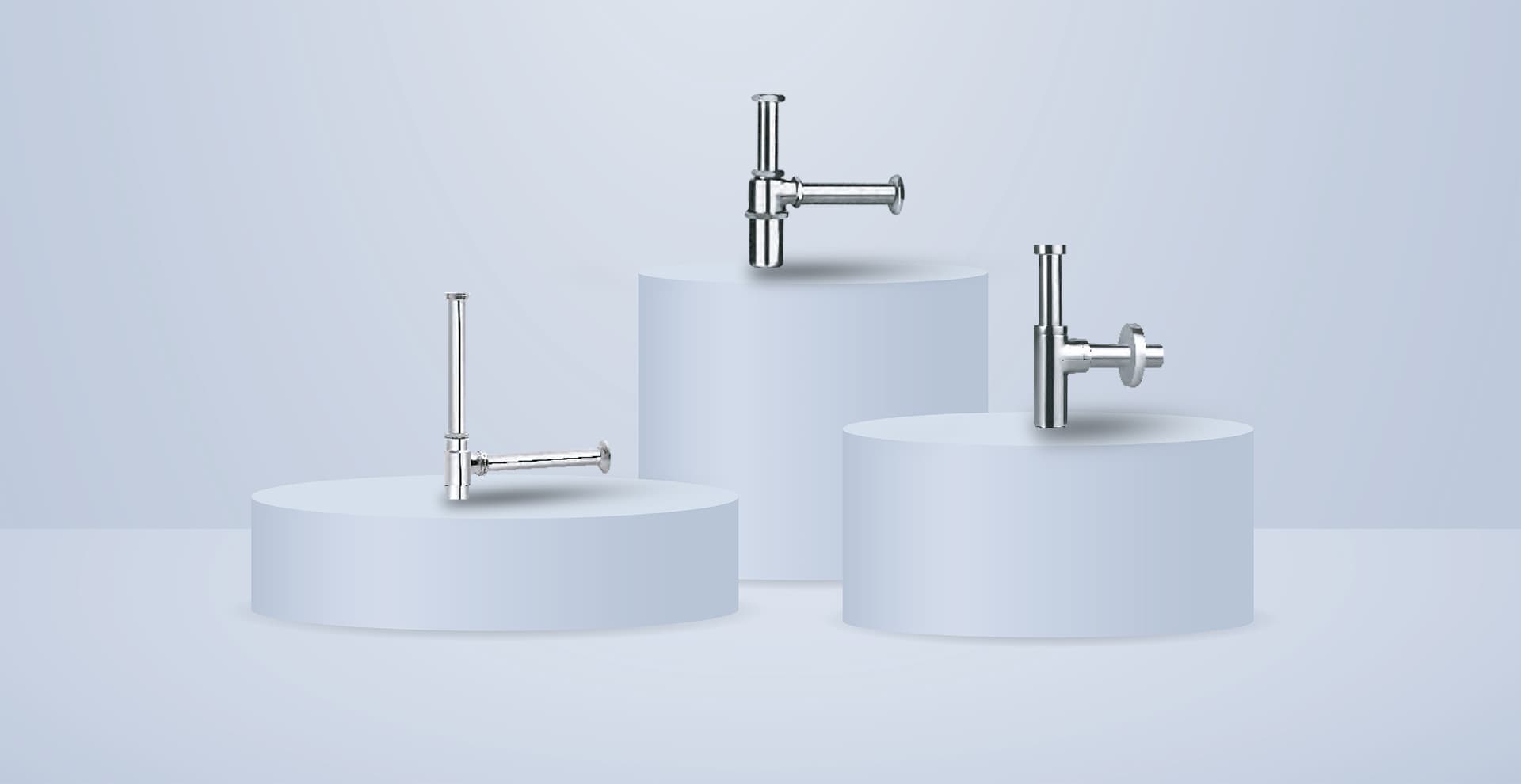
Bottle Traps — Reliable Drainage with Sleek Finishing

Filter By

Filter By
No Result
No Products Available.
Bottle Traps FAQs
Got questions? We've already got answers. It's like we can hear you thinking.
What Is a Bottle Trap?
A bottle trap is an important plumbing fitting that is fixed beneath wash basins to keep bathrooms odour-free. The component is called a bottle trap as its design and shape resemble an inverted bottle. Working well with both a bathroom and a kitchen sink, a bottle trap serves a dual purpose of preventing foul odours from entering living spaces and trapping rubbish and debris to avoid clogging pipes.
Generally made of brass or stainless steel, a bottle trap includes an inlet towards the top, from where the wastewater enters the trap and an outlet that directs the wastewater towards the waste pipe. A bottle trap works on a simple yet effective principle. The trap starts functioning the moment the tap is turned on. As water drains from the basin, it flows into the bottle trap, creating a water seal that blocks sewer gases from backing up into the room. This water barrier is maintained within the trap, and it also helps prevent larger particles from progressing through the drainage system and causing blockages. The bottle trap has a waste pipe installed with it underneath the sinks. The pipe facilitates the smooth drainage of water out of the trap. This particular add-on for bathroom sinks not only ensures a hygienic environment by containing potential contaminants but also minimises the risks of other plumbing issues.
What Are the Types and Functions of a Bottle Trap?
Bottle traps can be categorised into two major types, based on the material they are made of:
- Stainless-Steel Bottle Trap
The stainless-steel bottle trap is known for its corrosion resistance, durability, and resilience in harsh environments. Their sleek appearance further complements modern aesthetics, making them a popular choice for contemporary settings. Additionally, the anti-bacterial properties of stainless steel contribute to the maintenance of a hygienic environment.
- Brass Bottle Trap
A brass trap for the wash basin offers a classic and timeless design, while also ensuring sturdiness. Brass is also a corrosion-resistant metal and has good strength, which ensures a long lifespan for the trap. The high durability makes brass traps suitable for heavy-duty applications, and they can often be found in commercial and industrial settings. Many people also choose to install a brass bottle trap in personal bathrooms, as the traditional appeal of brass can effortlessly elevate any space.
The Functions of a Bottle Trap
Bottle traps serve multiple essential functions in bathroom plumbing systems. Some of these include:
- For Residential Plumbing
Installed underneath the wash basin, a bottle trap forms an essential part of the residential plumbing system. The trap helps combat foul odours and captures debris and wastewater, ensuring a pleasant and hygienic environment within the living space.
- Lightweight, Affordable, and Easy to Install
A significant advantage of installing a bottle trap underneath a wash basin is its lightweight construction, which simplifies the installation process significantly. Whether it's for a new bathroom or for a renovation project, a bottle trap is easy to handle and does not require too much time for installation. Additionally, the affordable price of the bottle trap makes it suitable for a range of budgets.
- Installations In Limited Spaces
Bottle traps come in various sizes and shapes, which makes them suitable for installations at varied places, even in cramped bathrooms and small spaces. This ensures effective utilisation of the limited space without having to sacrifice functionality.
- Durable and Corrosion-Resistant
Durability is one of the defining features of a wash basin bottle trap. Constructed using tough materials like stainless steel or brass, these traps are corrosion-resistant and are designed to withstand rigorous daily use. This resilience ensures a longer life and reduced maintenance requirements.
Know the Various Uses and Importance of Bottle Traps
- Connecting the Wash Basin to the Drainage System
A bottle trap has a pipe that connects the washbasin to the drainage system. Positioned beneath the sink, it allows wastewater to flow from the basin into the larger plumbing network. This connection ensures efficient disposal of used water, preventing backflow and leakages.
- Eliminates Odours and Promotes a Healthy Environment
One of the major uses of a bottle trap for a sink is its ability to eliminate foul odours that usually emanate from drains. The structure of the bottle trap creates a water seal that acts as a barrier, preventing sewer gases from entering the washroom. This not only contributes to a more pleasant and odour-free environment but also plays a crucial role in maintaining indoor air quality and creating a healthier living space.
- Improved Pipe Performance
The installation of a basin bottle trap enhances the overall pipe performance of drainage systems. It helps regulate the flow of water and prevents sudden pressure changes that might adversely affect piping. The bottle trap is also designed to prevent debris, like insects or dirt, from entering the plumbing ecosystem, which helps reduce the likelihood of build-ups and blockages.
- Prevents Clogging
The design of the bottle trap includes features that trap debris and prevent it from entering the main pipes, acting as a proactive measure against clogging issues in the drainage system. Regular maintenance, such as cleaning the bottle trap, is a simple and effective way to ensure the prevention of clogs, promoting the longevity and optimal performance of the entire plumbing system.
Know the Different Sizes and Dimensions of Bottle Traps
Bottle traps come in different shapes and sizes to suit varied installation requirements for wash basins. The price of a bottle trap largely depends on its material and size. Hindware offers a wide range of high-quality bottle traps at the best prices. Available sizes include:
- Bottle trap 32 mm with 300 mm & 175 mm, with connection pipe.
- Bottle trap 32 mm with 250 mm & 190 mm, with connection pipe.
The bottle trap is a simple bathroom add-on that forms an integral part of your bathroom’s plumbing system. It not only ensures a hygienic environment but also helps maintain proper drainage.
Top Contemporary Trends and Styles of Bottle Traps
Bottle traps can be round or square in shape, with the round shape giving a more calming vibe and the square version giving it a more formal look. It is important to take the shape of the basin into account when choosing a bottle trap, so you can ensure that the components work well together. While bottle traps are also available in a range of materials, choosing a chrome-plated brass bottle trap is one of the safest options.